Sunday, May 25, 2025

How to Use UPVC Solvent Cement the Right Way

 If you’ve ever worked with UPVC pipes—whether in plumbing or any kind of construction work—you’ve probably heard of UPVC solvent cement. But what exactly is it, and how do you use it properly? Let’s break it down in simple terms.

upvc solvent cement


What is UPVC Solvent Cement, Really?

Think of UPVC solvent cement like a special glue, but way more powerful. It doesn’t just stick two pieces together—it actually melts the surface of the pipe and fitting just enough so they fuse into one solid piece. Once it dries, the connection is super strong and completely leak-proof. No water escaping, no need to worry.

Why Use It?

1. It Keeps Things Leak-Free
The biggest reason people use UPVC solvent? It seals up joints tight. No drips, no leaks—just a smooth, efficient plumbing system.

2. Super Easy to Use
You don’t need fancy tools or to be a pro plumber. With just a little care, even beginners can get a solid, lasting joint.

3. Saves You Money
It’s affordable and it lasts. So you spend less upfront and save even more in the long run with fewer repairs or do-overs.

4. Tough Against Chemicals
UPVC joints made with solvent cement can handle harsh chemicals and won’t rust or corrode, making them perfect for industrial use too.


So, How Do You Actually Use It?

Step 1: Clean Up First
Make sure both the pipe and the fitting are clean and dry. Dirt or oil can mess with the bond.

Step 2: Apply the Solvent Cement
Brush a nice even layer of the solvent onto both parts—the pipe and the fitting. Don’t go overboard, but make sure it’s fully covered.

Step 3: Join and Twist
Push the pieces together right away and give a slight twist. This spreads the cement evenly and helps the fusion start. Hold them together for a few seconds.

Step 4: Let It Cure
Now the hard part—waiting. Depending on pipe size and room conditions, it might take a few minutes to a few hours for the bond to fully cure. Don’t rush it.


What About “UPVC Solutions”?

Sometimes when people say “UPVC solution,” they might mean the solvent cement itself, or they could be talking about extras like sealants, lubricants, or cleaners. These products help keep the whole system working smoothly and lasting longer.

When choosing the right solution, think about where and how the pipes will be used. For example, in an industrial setup with strong chemicals, you’ll want a heavy-duty solvent that can handle that environment.

Always follow the instructions on these products for the best results.


Mistakes to Watch Out For

  • Too Much or Too Little Solvent: More isn’t always better. Use just enough to coat the surfaces without overdoing it.

  • Skipping the Cleaning Step: This one’s a biggie. Dirty surfaces = weak joints.

  • Not Waiting for It to Cure: Don’t be in a hurry. Let it fully dry to get the strongest bond possible.


Final Thoughts on best solvent cement

UPVC solvent cement is a simple yet powerful tool. Use it right, and your pipe joints will be rock solid and leak-free for years. Whether you’re a pro or doing some DIY work around the house, understanding how it works and following a few basic steps can make all the difference.

And don’t forget—adding a good sealant or cleaner can take your installation from “done” to “done right.”

Tuesday, December 31, 2024

Plastochem: A Long-Lasting Adhesive Solution for Pipe Fixing

cpvc solvent cement by plastochem


Plastochem specializes in manufacturing Pipe Fix solvent cements tailored for PVC and CPVC plastic piping systems. With our commitment to quality and innovation, we deliver solutions that are environmentally friendly, durable, and efficient for all your piping needs.

Visit official website cpvc solvent cement

Why Choose Plastochem’s Pipe Fix Solvent Cements?

  1. Eco-Friendly Formulation
    Our solvent cements are engineered with a low Volatile Organic Compound (VOC) formula, making them a safer and greener option. This ensures minimal environmental impact without compromising on performance.

  2. Unmatched Quality
    Plastochem products are recognized as industry leaders for their superior bonding strength and long-lasting durability. Whether you're working on residential, commercial, or industrial projects, you can rely on our products to deliver flawless results.

  3. Extensive Product Line
    We provide a diverse range of solvent cements designed to meet various application requirements. No matter the complexity or scale of your project, Plastochem has the perfect adhesive solution to ensure secure and leak-free pipe connections.

  4. Versatility
    From small residential repairs to large-scale industrial installations, our Pipe Fix solvent cements are ideal for every scenario. They seamlessly bond PVC Solvent Cement and CPVC pipe and fittings, ensuring reliability and efficiency in any environment.

Applications of Plastochem Pipe Fix Solvent Cements

  • Residential: Perfect for plumbing systems, irrigation pipes, and other household applications.
  • Commercial: Trusted by contractors for robust performance in complex piping networks.
  • Industrial: Designed to handle high-demand scenarios with consistent, top-quality results.

At Plastochem, we are committed to delivering products that not only meet but exceed customer expectations. Our Pipe Fix solvent cements are the go-to choice for professionals seeking quality, reliability, and environmental responsibility in their piping solutions.

For a lasting bond that you can trust, choose Plastochem!

Monday, December 30, 2024

Plastochem PVC-U Solvent Cement: A Reliable Solution for PVC Pipe Bonding

 Introduction to Plastochem PVC-U Solvent Cement

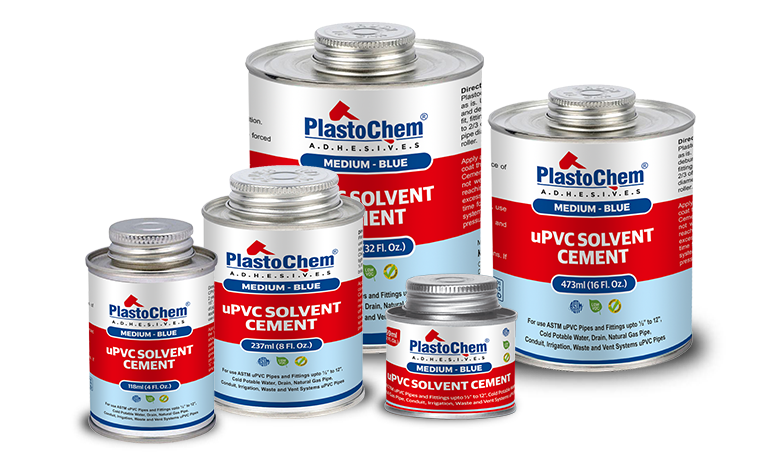
Plastochem's PVC-U Solvent Cement, designed for pipes up to 110mm (4"), is a premium adhesive solution tailored for agricultural applications. It ensures secure and reliable bonding of PVC-U pipes and fittings, making it an indispensable product for a variety of industries, including plumbing, agriculture, and construction.


What is PVC Solvent Cement?
PVC solvent cement, also known as PVC glue or adhesive, is a specially formulated compound used to join PVC components. It provides a permanent and robust connection through a chemical bonding process that fuses the surfaces of PVC pipes and fittings.

Key Features of Plastochem UPVC Solvent Cement

  1. High Flow Characteristics: Ensures smooth application and optimal adhesion across surfaces.
  2. Cost and Power Saver: Reduces overall project expenses with efficient bonding capabilities.
  3. Lightweight: Facilitates easy handling and transportation.
  4. Smooth Internal Surface: Prevents debris buildup, ensuring efficient flow in pipelines.
  5. Portable Water Compatibility: Suitable for potable water supply systems, ensuring safety and hygiene.
  6. 100% Leak-Proof Joints: Guarantees secure and watertight connections.

Product Variants
Plastochem offers PVC solvent cement in various forms to suit different requirements:

  • Solvent Cement (Tin)
  • Solvent Cement (Bottle)
  • CPVC Solvent Cement

Material Composition and Performance

  1. Composition: A precise blend of PVC resin and solvents like tetrahydrofuran (THF) or cyclohexanone, which softens PVC surfaces for a strong bond.
  2. Chemical Reaction: The solvent initiates a fusion process that strengthens as it evaporates, creating a permanent bond.
  3. Fast Bonding: Offers quick initial adhesion within minutes, with complete curing in a few hours.
  4. Pressure Rating: Maintains the pressure integrity of PVC pipes and fittings, ensuring durability in high-pressure systems.
  5. Color Options: Available in clear or gray to match aesthetic requirements.

Applications
Plastochem PVC-U Solvent Cement is ideal for:

  • Agricultural irrigation systems.
  • Plumbing and water supply pipelines.
  • Industrial piping systems.
  • Construction projects requiring durable PVC connections.

Safety and Usage Guidelines
To ensure optimal performance and safety:

  • Use in a well-ventilated area to avoid inhaling fumes.
  • Wear appropriate personal protective equipment (PPE).
  • Follow the manufacturer’s instructions for application and curing.

Why Choose Plastochem?
Plastochem is committed to delivering high-quality adhesive solutions that meet the diverse needs of its customers. Our PVC-U Solvent Cement offers unmatched reliability, ease of use, and cost-efficiency, making it the perfect choice for professionals in agriculture and beyond.

By choosing Plastochem, you invest in products that stand the test of time, ensuring a secure and efficient pipeline system

Tuesday, October 22, 2024

how to make solvent cement for plumbing?

Solvent cement for plumbing is commonly used for joining PVC (polyvinyl chloride), CPVC (chlorinated polyvinyl chloride), and ABS (acrylonitrile butadiene styrene) pipes.

kg plastochem India


It essentially melts the surface of the plastic pipes and fittings, allowing them to bond as they harden. You can make solvent cement using the following steps:

Materials Needed:

  • PVC or CPVC scraps (depending on the pipe material you're working with)
  • Acetone or Methyl Ethyl Ketone (MEK)
  • Clean glass or metal container with a lid
  • Stirring stick

Steps to Make Solvent Cement:

  1. Collect PVC/CPVC Scraps:

    • Obtain small pieces of PVC or CPVC pipe or fittings. The same material should be used for the solvent cement to ensure proper bonding.
  2. Prepare the Solvent:

    • Pour acetone or methyl ethyl ketone (MEK) into the container. Acetone is readily available in hardware stores, and it works well as a solvent for dissolving plastics like PVC.
  3. Dissolve the Scraps:

    • Cut the PVC or CPVC scraps into small pieces to increase their surface area. This will make them dissolve faster.
    • Add these pieces to the acetone or MEK in the container. Use enough solvent to cover the plastic scraps. Stir occasionally to help dissolve the pieces.
  4. Allow the Mixture to Dissolve:

    • Seal the container with a lid and let the scraps sit in the solvent for several hours. Stir the mixture periodically. The plastic should dissolve into the solvent, creating a thick, glue-like substance.
  5. Adjust the Consistency:

    • If the solvent cement is too thick, add more acetone or MEK to thin it. If it's too thin, add more plastic scraps to thicken the solution.
  6. Storage:

    • Keep the solvent cement in a tightly sealed container when not in use. It can evaporate quickly, so sealing it will maintain its effectiveness.

Application:

  • Before applying, clean the pipe and fitting with primer or solvent to remove dirt and oil.
  • Brush a layer of your homemade solvent cement onto both surfaces (pipe and fitting), then quickly join them together.
  • Hold in place for a few seconds while the cement sets, and allow the bond to cure as per the solvent cement’s drying time (usually 24 hours for full strength).

pvc solvent cement

This homemade solvent cement is quite strong, but make sure to follow local plumbing codes and manufacturer recommendations when performing any plumbing work.

Thursday, October 17, 2024

U-pvc pipe adhesive

Brand: PlastoChem
Specific Uses For Product plumbing
Material: Polyvinyl chloride
Compatible Material Polyvinyl Chloride
Item Form Liquid
Packed: Tin

u pvc solvent cement code


Pack Size (ml)Material
100Tin
250Tin
500Tin
1000)Tin
5000Can

About this item

UPVC SOLVENT CEMENT: A regular bodied clear, fast setting, high strength, low VOC emission solvent cement for UPVC/ PVC pipes and fittings up to "3" diameter for schedule 40 and schedule 80.


MULTIPLE APPLICATIONS recommended for all grades & types of PVC pipe & fittings, drain, waste, vent pipe and portable water.
MULTIPLE APPLICATIONS:Tin
LONG-LASTINGhigh-quality, high-strength and stable sealing
INDUSTRY GRADE PERFORMANCE 50°C (400 F) to 440°C (1100 F)
HOW TO USE1. Clean the joining surface
2. apply solvent cement to pipe end.
3. Immediately insert pipe in fitting socket & twist 1/8-1/4 turn until pipe reaches to bottom of socket.

Tile Adhesive: The Modern Foundation of Strong Tile Installations

Understanding Tile Adhesive Tile adhesive is an advanced bonding compound developed to securely attach tiles to a wide range of surfaces. Un...